
Regenerative Agriculture Training Session — Girei
Restoring soil, reviving yields. A hands-on training module for local farmers facing topsoil depletion — teaching composting, crop rotation, and conservation tillage techniques for long-term agricultural resilience.
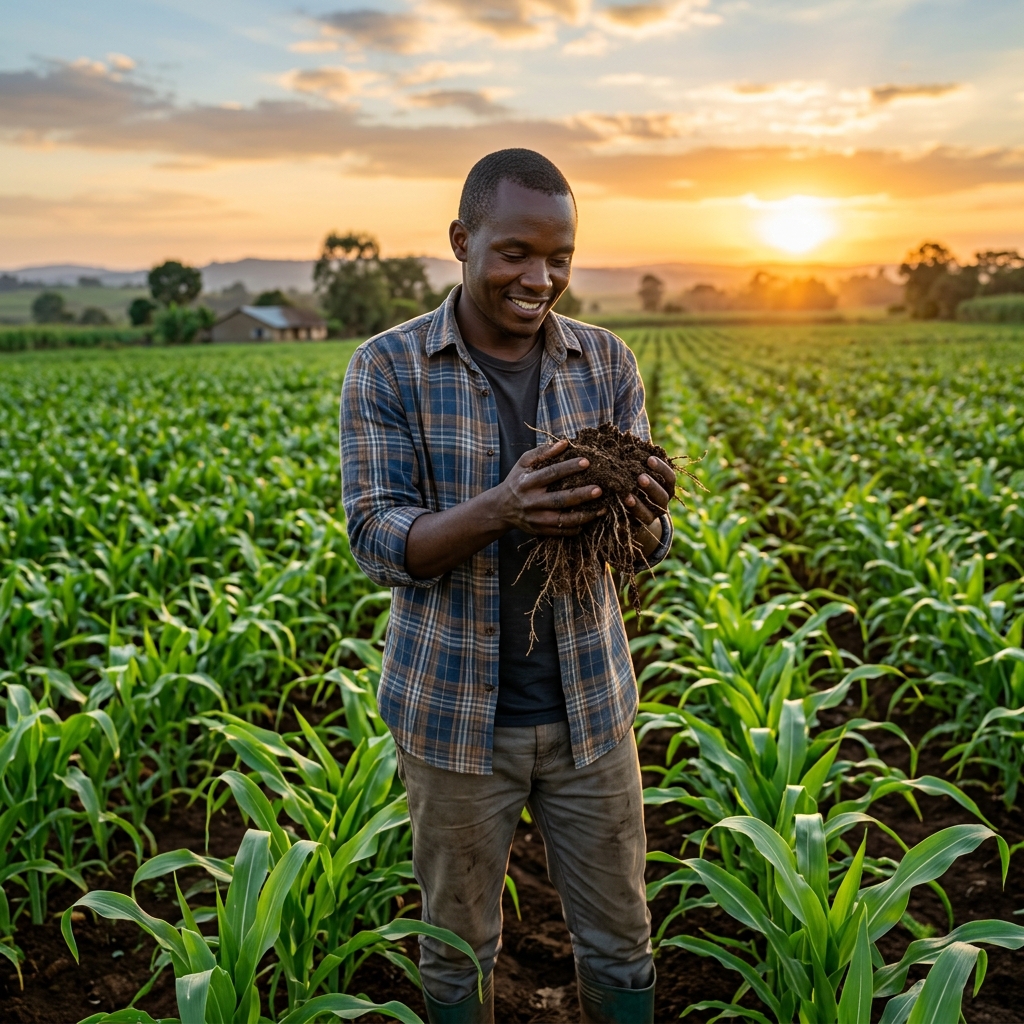
Regenerative Agriculture Training — Girei, Adamawa State, 2024
The agricultural land in Girei, Adamawa State, tells a familiar story. Decades of intensive, input-dependent farming practices — driven by the twin pressures of population growth and the need for short-term yield maximization — have left soils depleted of organic matter, compacted, and increasingly unable to support the yields that local families depend on. Declining fertility is not just an agricultural problem; it is a food security crisis and a direct consequence of the broader climate emergency.
CEEECF responded with a practical, intensive training session specifically designed to meet farmers where they are — with techniques that are immediately implementable, locally appropriate, and proven to restore soil health over time without requiring expensive external inputs.
"Healthy soil is the foundation of food security. Regenerative practices don't just restore yields — they rebuild the ecosystem that farming depends on."
The training covered three core areas. Rapid composting demonstrated how organic waste — materials readily available on most farms — can be transformed into nutrient-rich compost within weeks, providing a free, sustainable alternative to chemical fertilizers. Crop rotation strategies showed farmers how sequencing different crops across seasons can naturally restore nitrogen to depleted soils, break pest and disease cycles, and improve overall soil structure. Conservation tillage techniques — including minimum-till and no-till approaches — taught how to preserve soil moisture, reduce erosion, and maintain the biological activity that makes soil productive.
The hands-on format was intentional. Farmers were not passive recipients of information; they worked the soil, built compost heaps, and experimented with tillage tools under guidance. This experiential approach is more likely to translate into lasting behavioral change than lecture-based instruction alone.
The farmers who participated left equipped with practical skills and a framework for continuing to improve their soil over time. The work of regenerative agriculture is not a single intervention — it is a long-term shift in relationship between farmer and land. CEEECF's role is to catalyze that shift.
Training Photography